Project Overview
-
Development Timeline: Strict maximum two-month full development cycle.
Manufacturing Method: All projects must be specifically designed and optimized for FDM 3D printing utilizing PLA or PETG filaments.
Supply Chain: Component sourcing is strictly limited to Amazon or DigiKey.
Budget Constraints: The final manufacturing cost per prop must remain under $100, encompassing all raw materials and hardware.
Process Tracking: Comprehensive documentation is required for all stages of work.
-
Engineering & Design: Led mechanical and electrical design, supported by in-depth 3D model analysis.
Systems Integration: Executed comprehensive software and hardware integration.
Fabrication & Procurement: Managed material sourcing, performed cost analysis, and completed hands-on fabrication.
Documentation: Authored detailed written documentation of all workflows and developed step-by-step construction guides.
-
Safety & Usability: Props must be uncompromisingly safe and intuitively easy to operate.
Design Efficiency: 3D models must be optimized to use the absolute minimum amount of printing material.
Hardware Standardization: Fasteners and internal hardware must be standardized across the entire prop ecosystem.
Quality Assurance: Rigorous testing is required for all builds to guarantee reliable operation and a flawless public release.
Market Accessibility: Designs must prioritize simplicity to maximize accessibility and ease of building within the broader cosplay community.
Aesthetic Fidelity: Every final product must authentically capture the spirit and visual language of the original property.
Documentation: All construction guides and processes must be exceptionally clear, user-friendly, and easy to follow.
-
Varying Complexity: Highly complex prop architectures frequently necessitate less intuitive assembly and operational methods.
Scalability & Standardization: Extreme variations in prop dimensions create significant challenges for establishing a standardized hardware ecosystem.
User Skill Gaps: Designing for the broader maker community requires accommodating a general lack of formal engineering knowledge among typical prop builders.
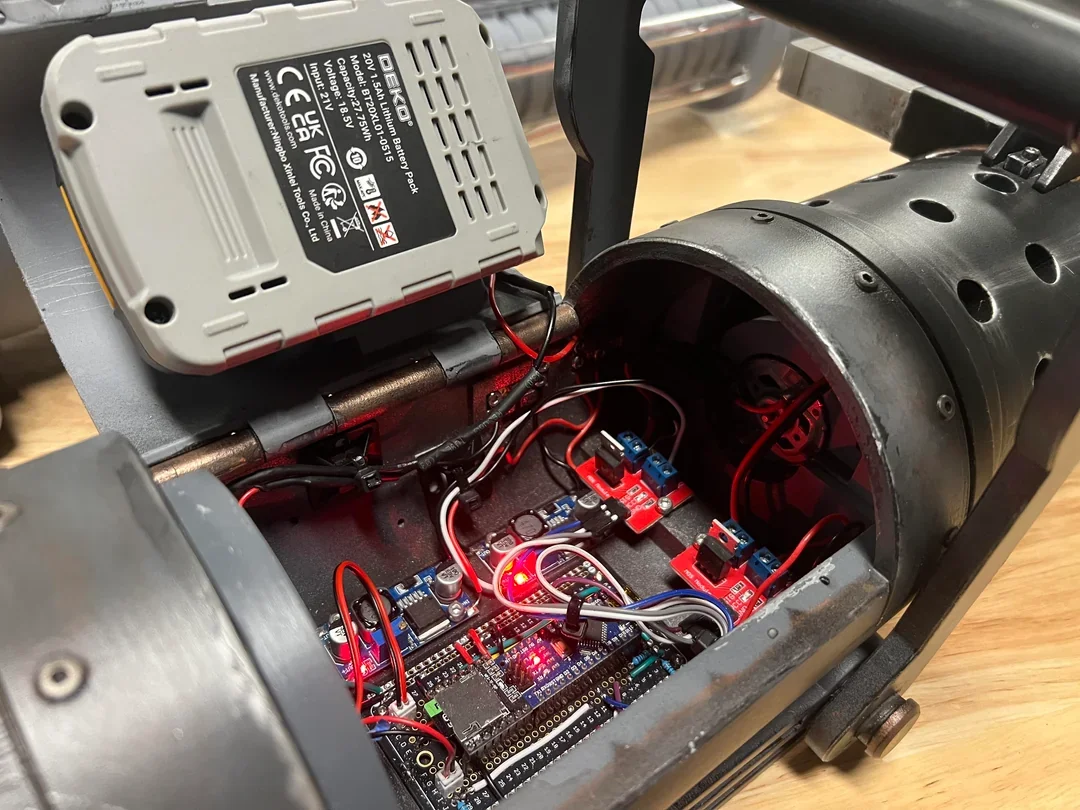
The Z6 electronics were designed around a standard drill and an Arduino Nano to keep the components simple and cost-effective
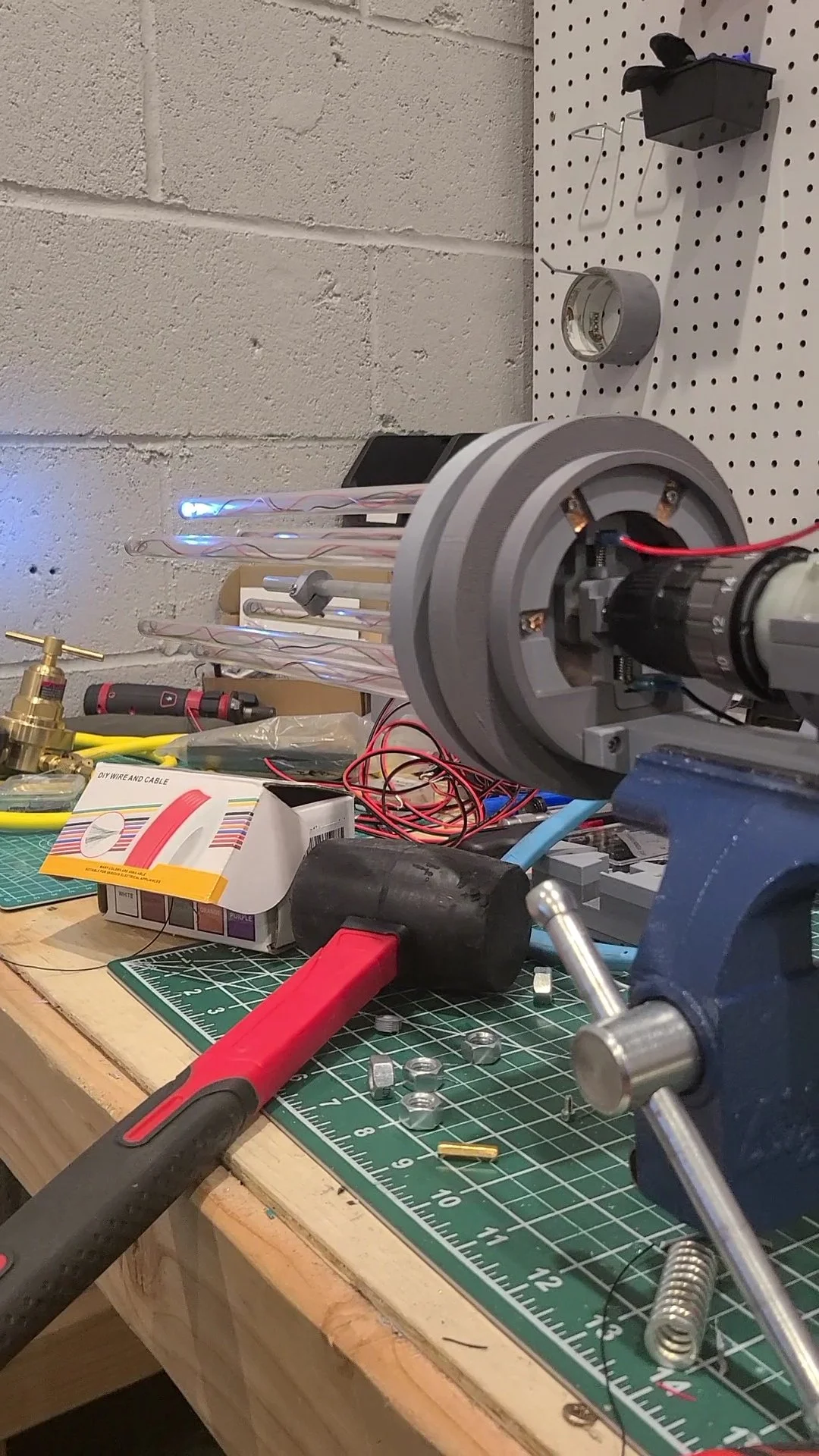
Z6 Rotating Barrel Assembly: Each barrel corresponds to a phase on a bespoke commutator, effectively synchronizing the drill's rotation with the electrical output.
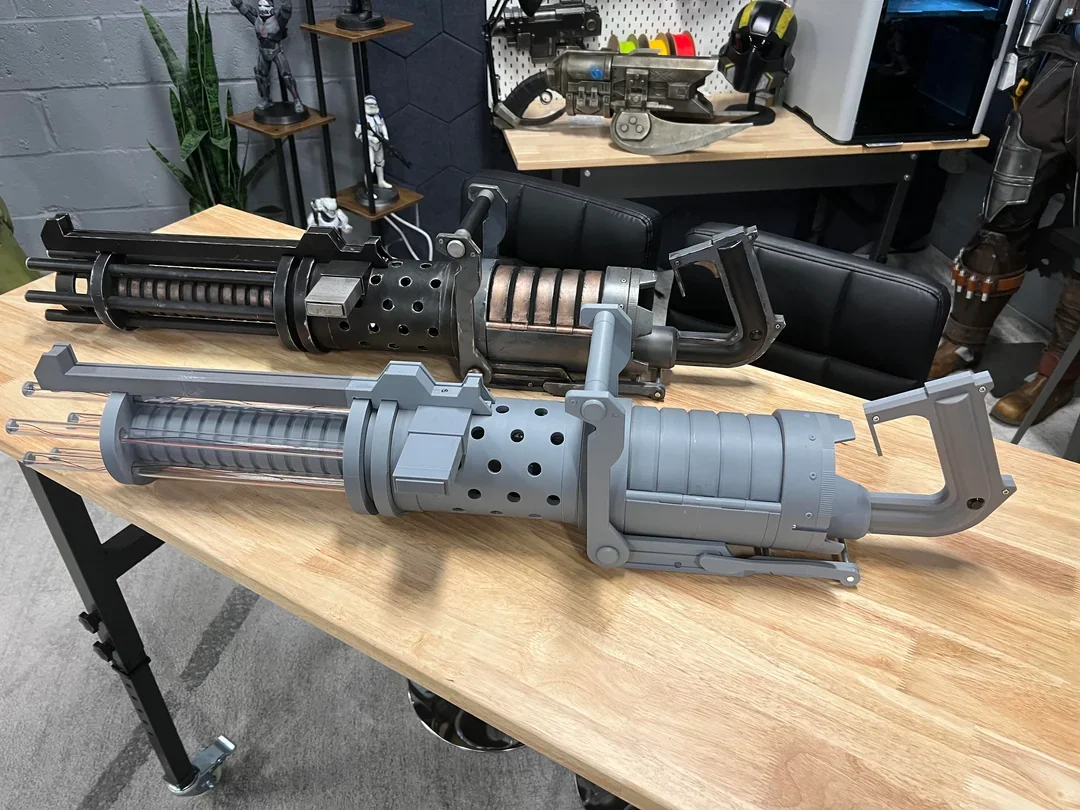
A fully finished Z6 next to a model used for testing.
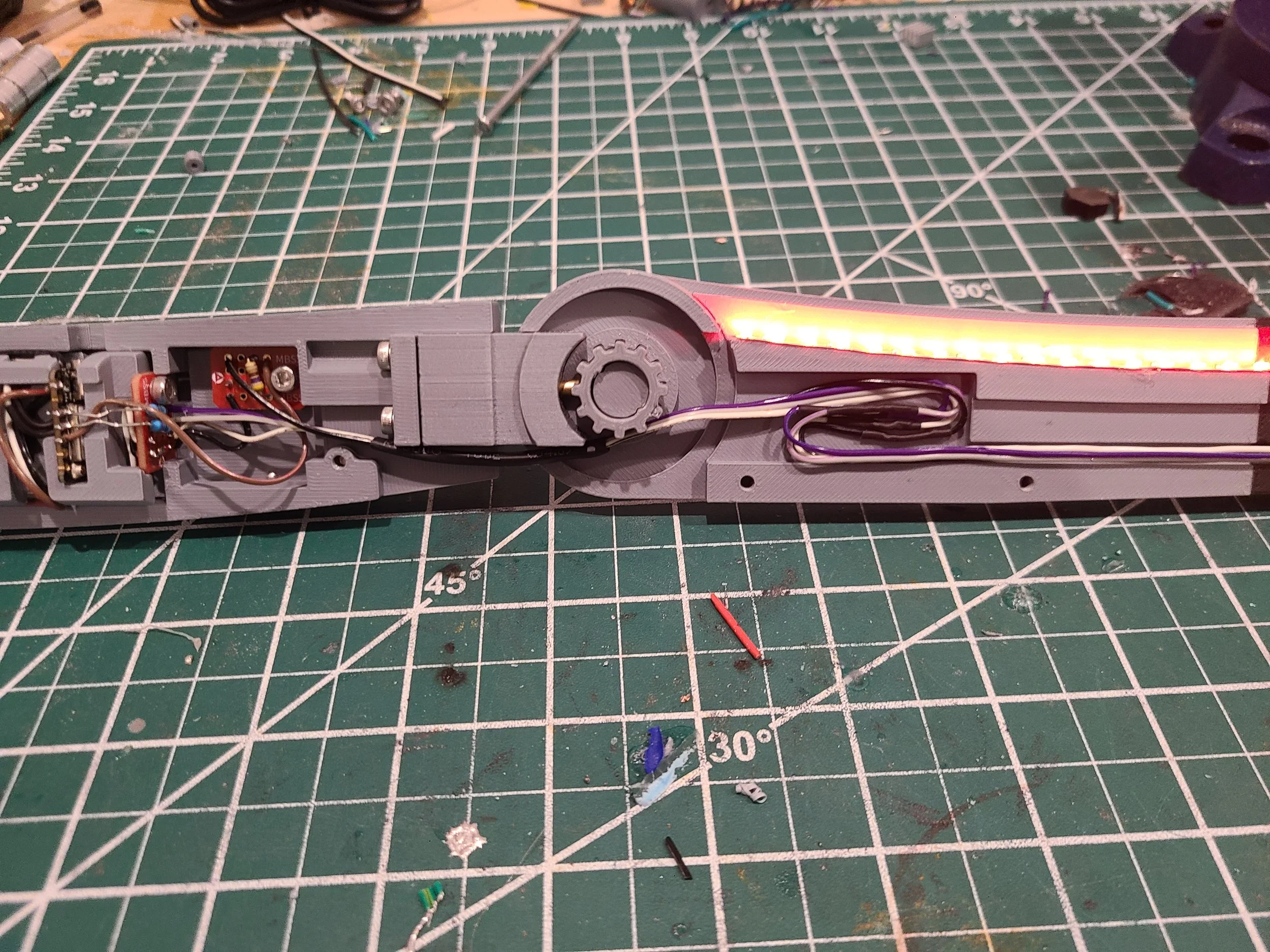
Predator Badlands Sword: Utilizes a two-position lock to mimic the transforming mechanism seen in the film, featuring LED lighting controlled by an ESP32-C3.
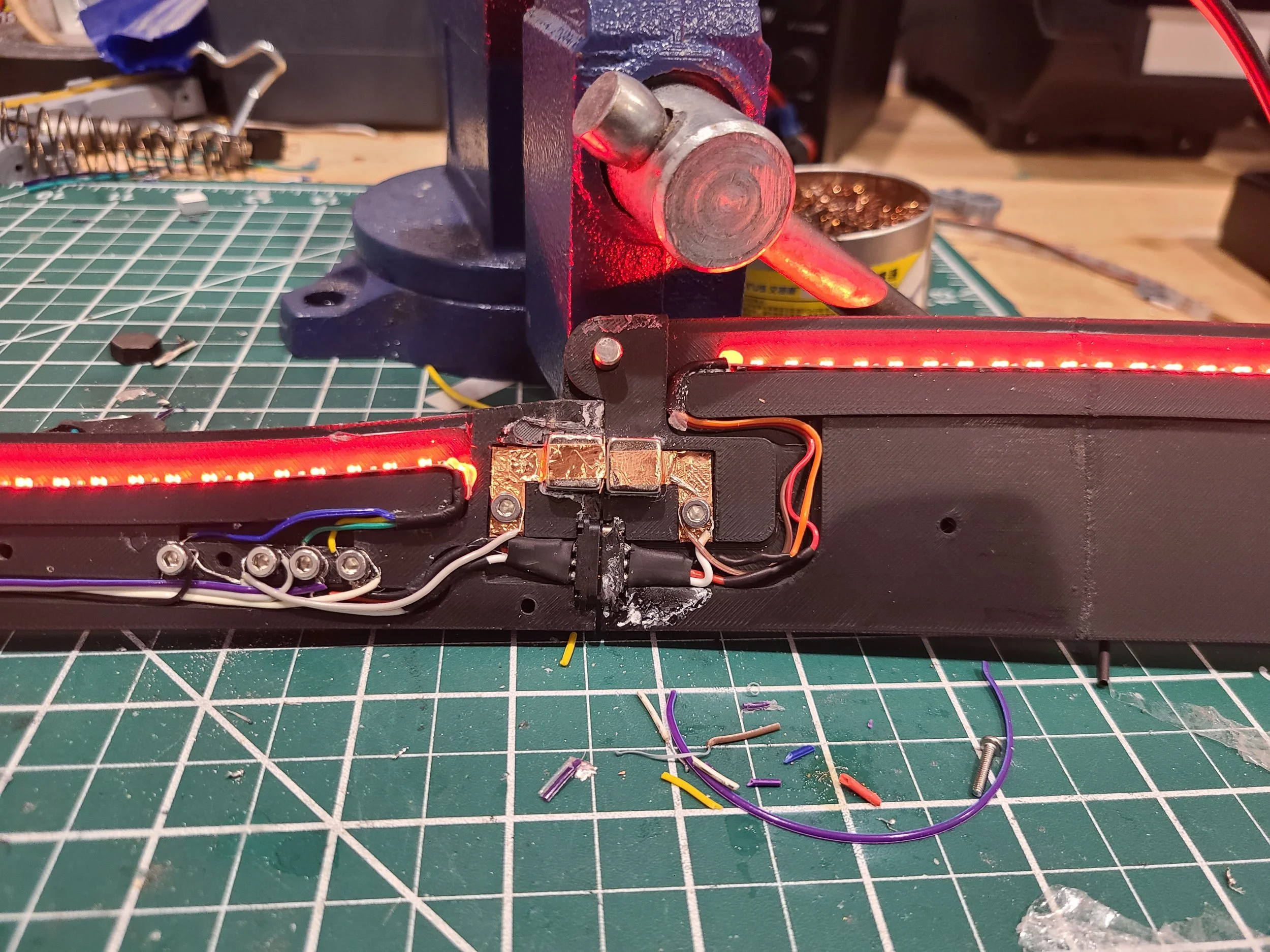
The Predator Badlands Sword features magnetic contacts that function as a switch to trigger the radiating LED animations.
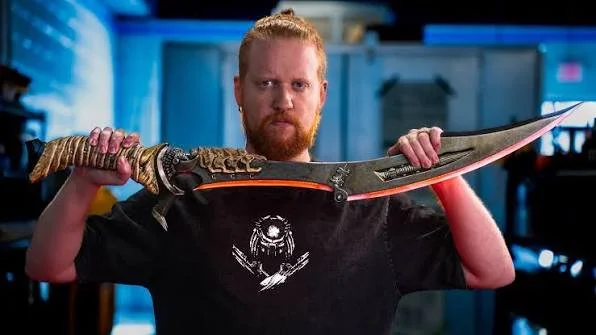
Finished Predator Badlands Sword (Jamie McCann pictured)
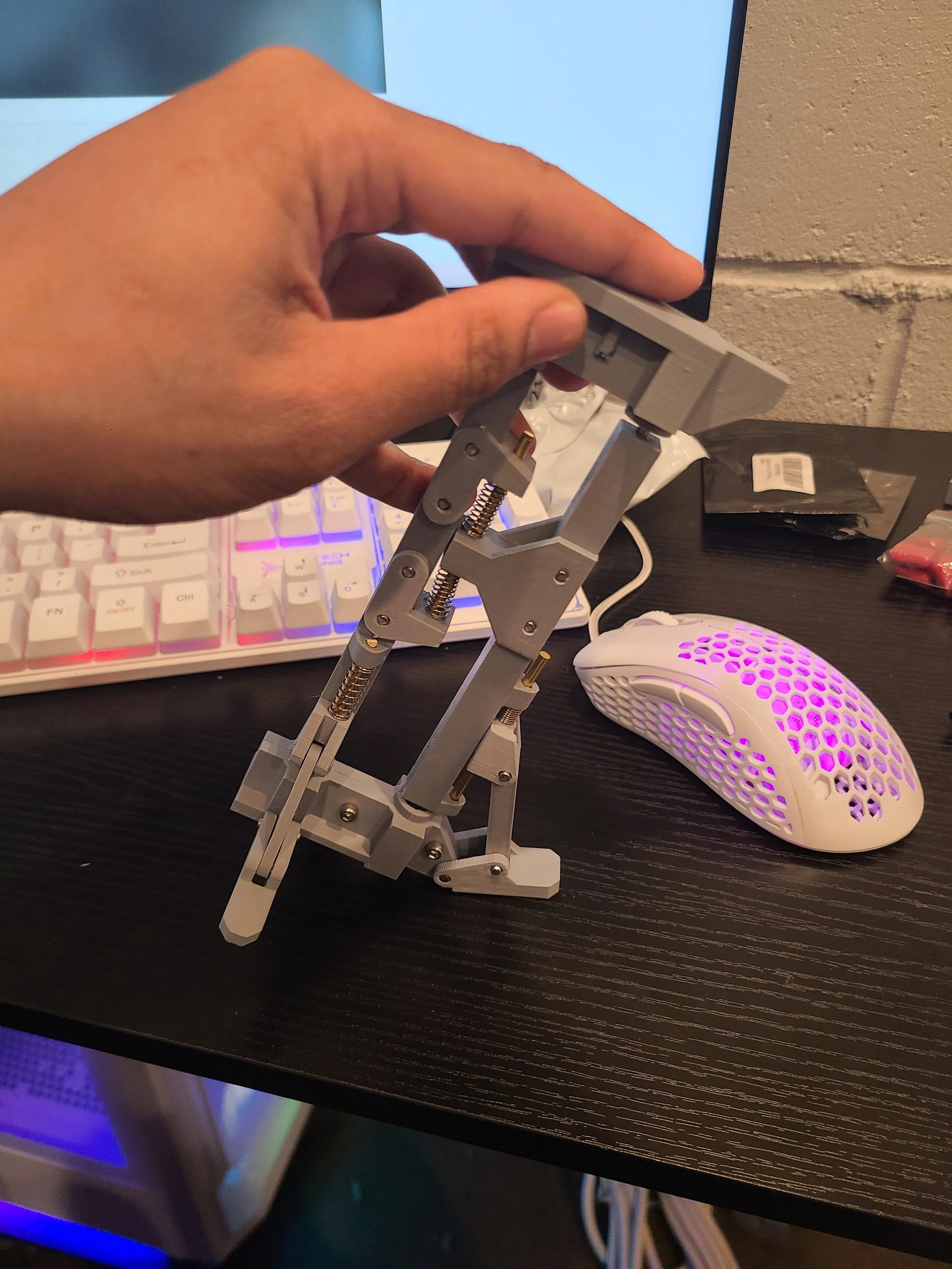
Cosplay Stilt Prototype: Designed to improve overall mobility and provide a more beginner-friendly walking experience
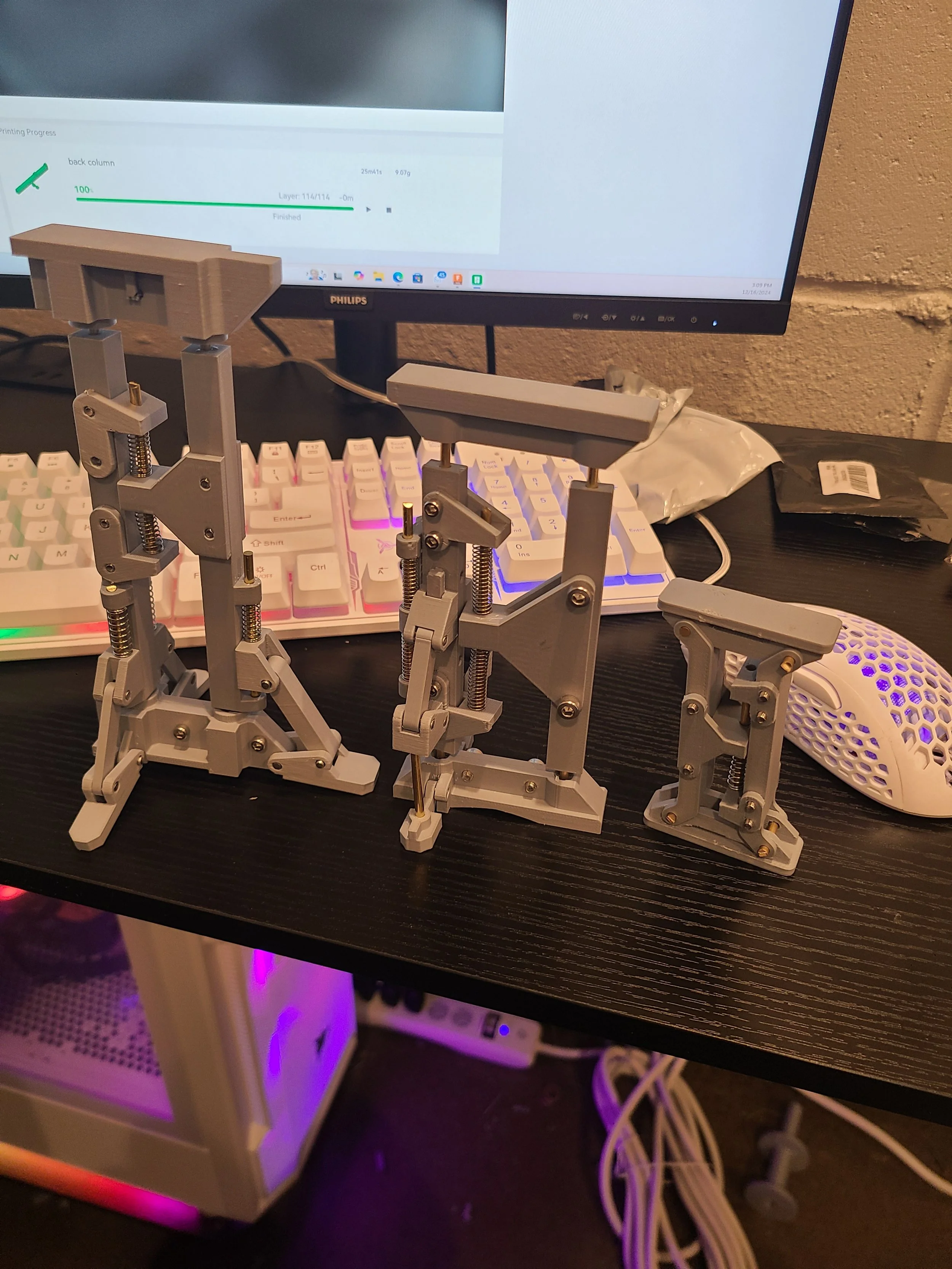
Cosplay stilt prototype progression
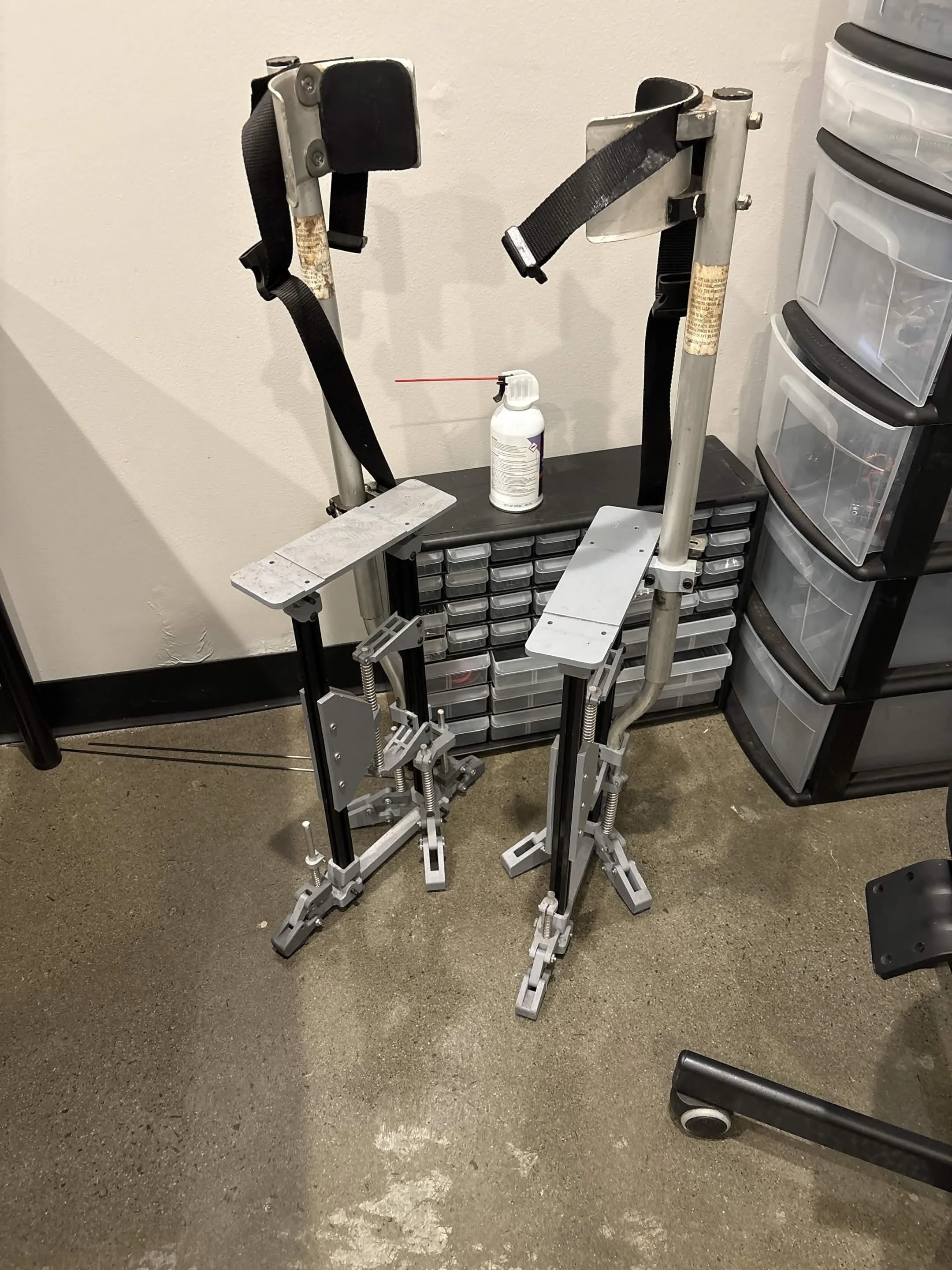
Full-Size Stilts: Designed for maximum affordability and accessibility, the primary structure utilizes aluminum extrusions and 3D-printed PLA. Capable of supporting up to 250 pounds, this design offers a significantly easier learning curve for beginners compared to traditional drywall stilts.
Predator Badlands Sword Preview
Doom Chainsaw Shield Preview
Z6 Rotary Cannon Preview
Gears of War Lancer Preview